Your local project
My gate is 36 inches wide. Does that guarantee access?
No. Measure the actual clear opening, then show the approach, corners, slope and room around the stump. Matt needs to assess the complete route and working space.
BACKYARDS, FENCE LINES & THE ROUTE BETWEEN
Getting a stump out of the way starts with getting the equipment to it. Matt assesses the stump, the route through your property and the features around the work, then helps you plan the next step.
Serving Shawnee from Lenexa · Directly with owner Matt Altrich
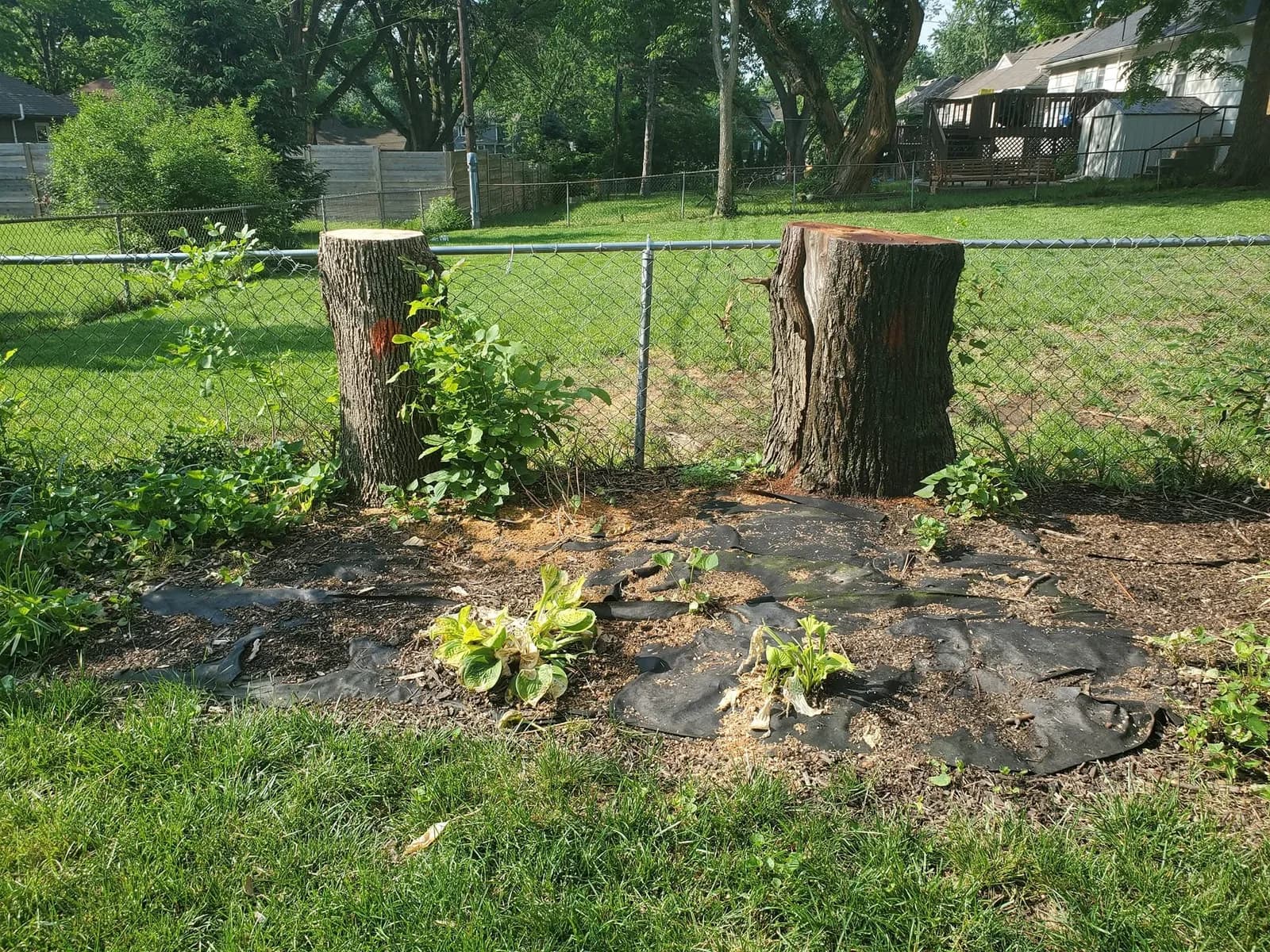
MEASURE THE OPENING. PHOTOGRAPH THE WHOLE ROUTE.
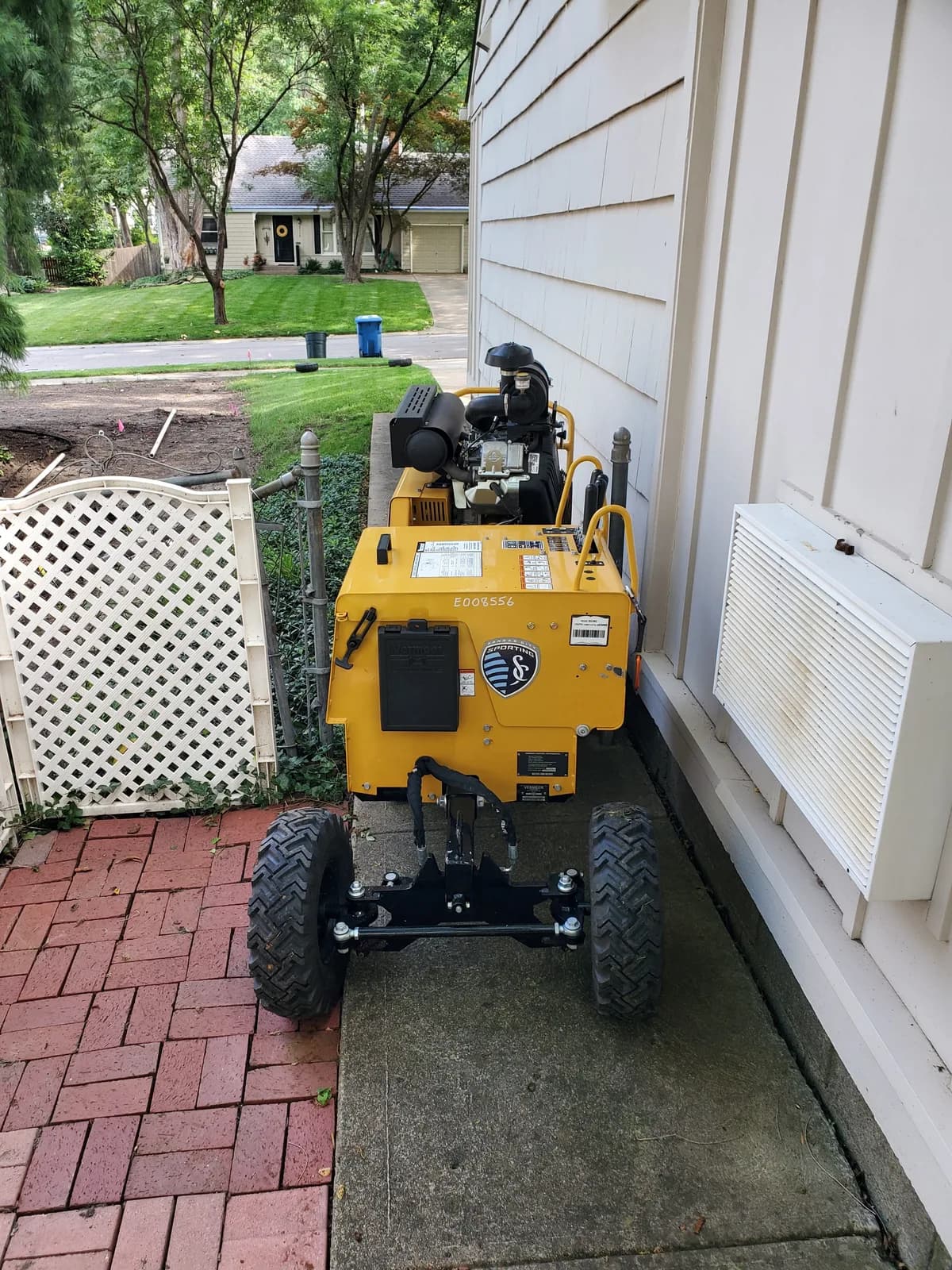
Measure the usable opening with the gate fully open. Posts, latches and hinges can reduce the space even when the gate panel itself is wider. Send that measurement with a photo taken straight through the opening.
Follow the path from the driveway to the stump in your photos. Include tight corners beside the house, steps, retaining walls, slopes and soft or wet areas. The grinder also needs room to work once it reaches the stump.
If access depends on a neighbor’s yard, an HOA common area or public land, make those arrangements clear before scheduling. Do not assume the shortest path is available for equipment.
Tell Matt if the route holds water or becomes soft after rain. Photos help with the initial assessment, but uncertain access may need additional details or an on-site look before the work can be confirmed.
WORK AROUND WHAT IS STAYING
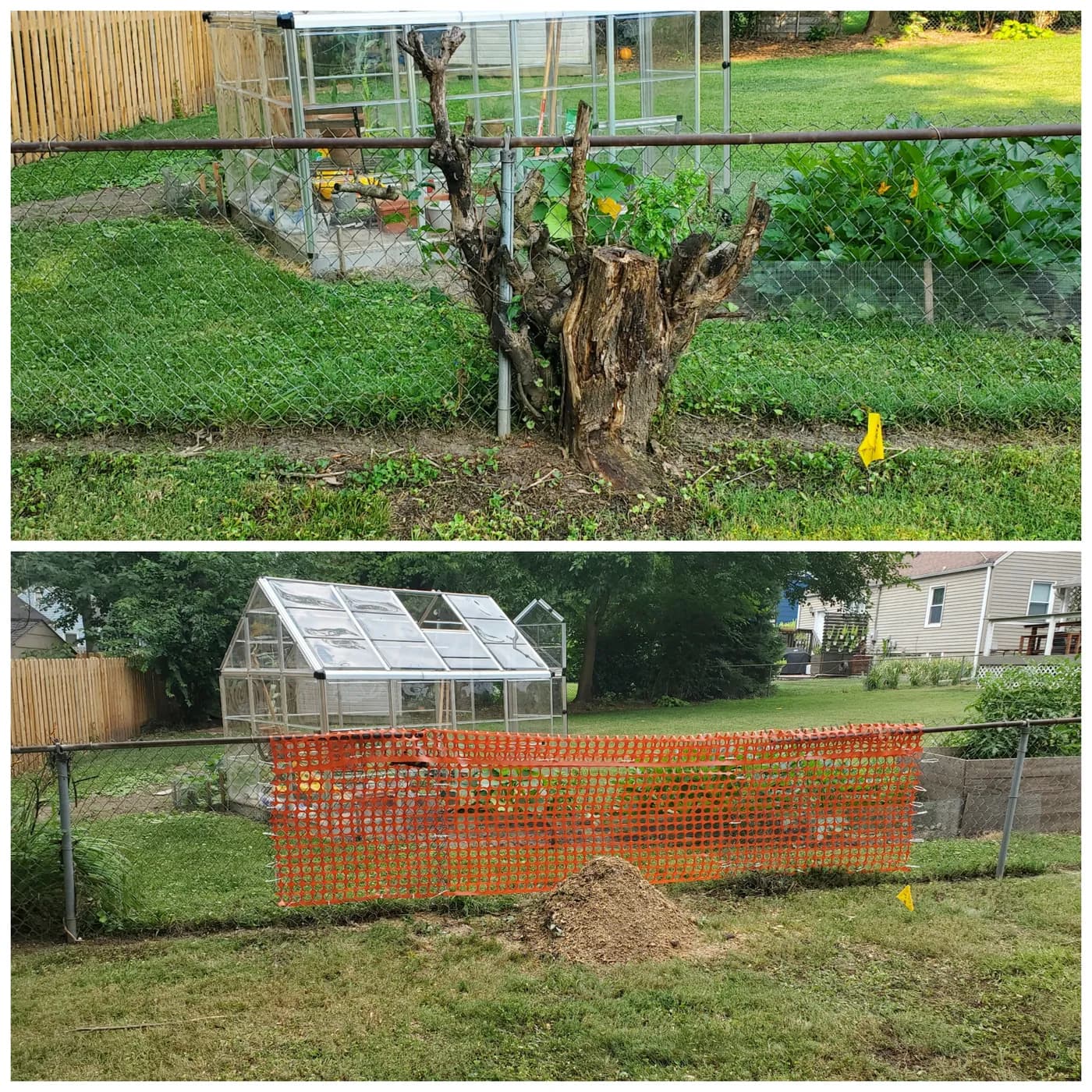
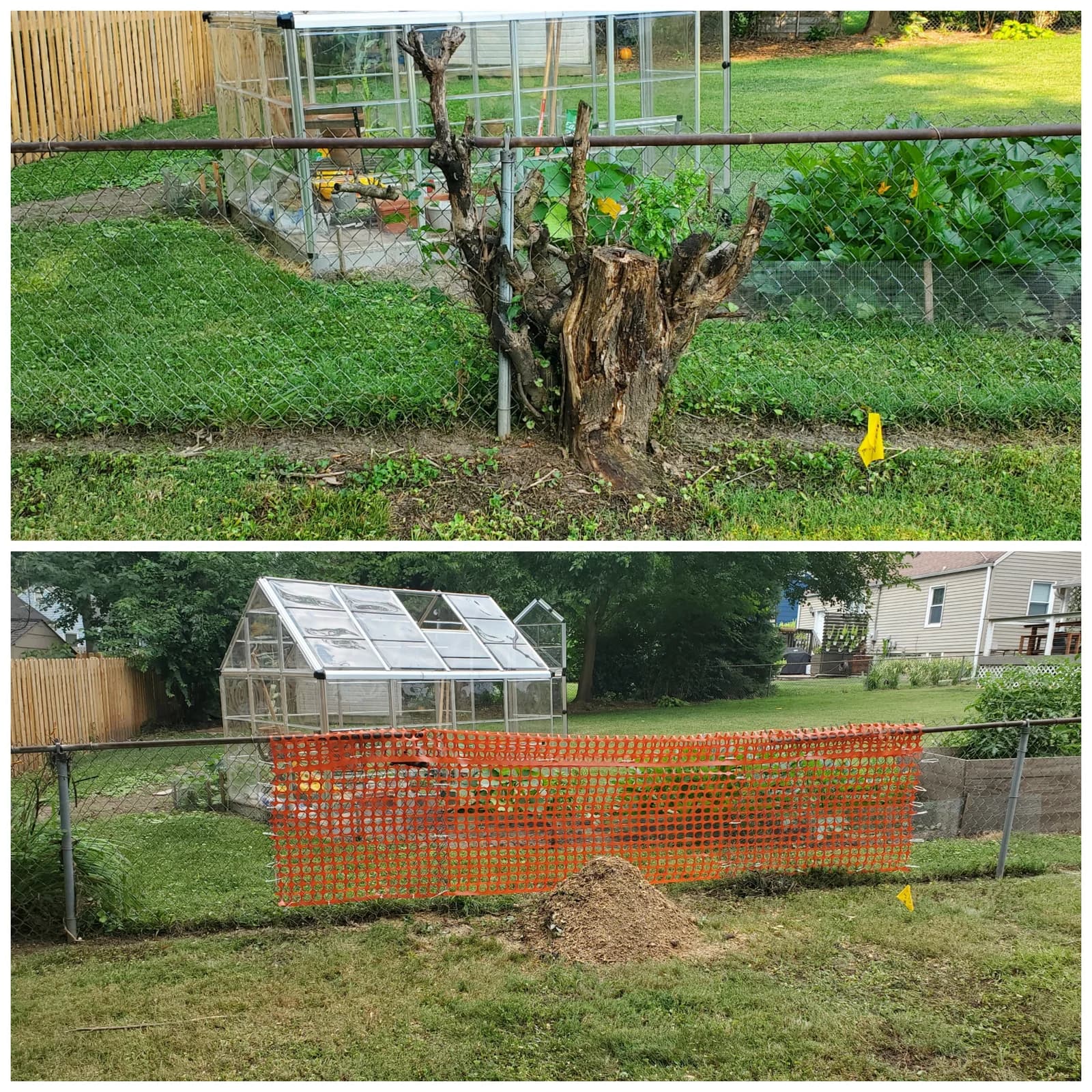
A stump beside a fence may have roots spreading toward posts, edging or a neighboring property. Photograph both the base and the surrounding fence line so Matt can assess the clearance.
Point out any wire, metal or old hardware you know is embedded in the wood. Identify which roots you want addressed and whether a nearby living tree may be connected to them. Selected surface-root work can be assessed, but complete root-system excavation is a different job.
If a new fence is planned, share the proposed post locations and the installer’s preparation requirements. Grinding a visible stump does not guarantee that every future post hole will be free of buried roots.
Stump roots & selected surface-root workThese Heartland project photos make the clearance issue easier to see. Close views reveal wire and wood together; the before-and-after view also shows the fence opening and the grindings that remain. Discuss fence access and any repair arrangements as part of planning your project.
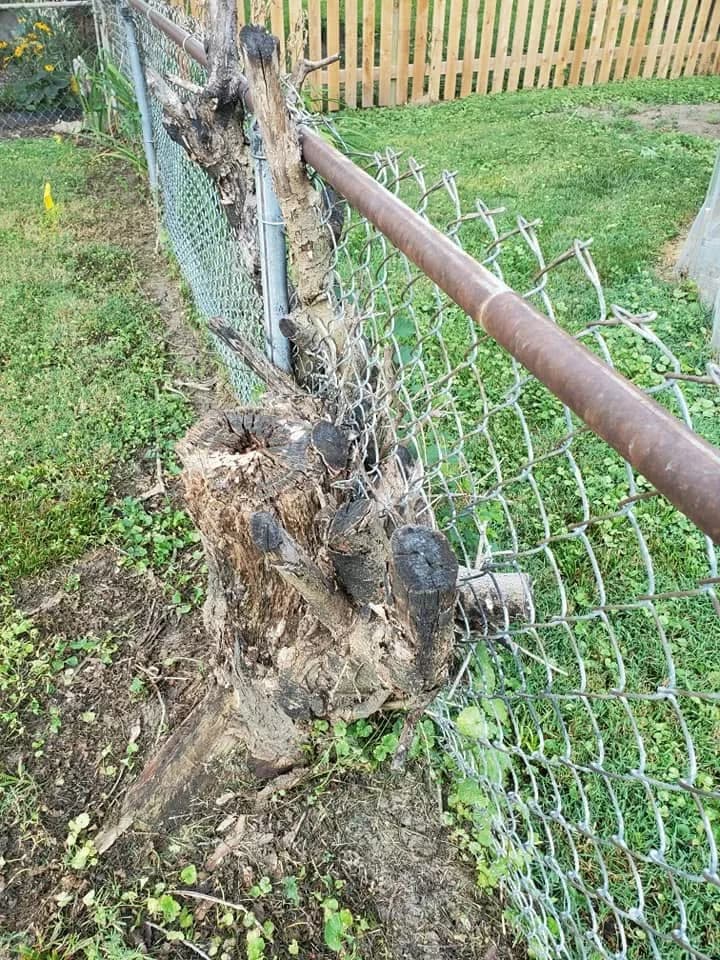
A planned tree removal can leave a cut stump in place. A fallen tree can leave a raised root plate, attached trunk and a much less predictable work area. Those are different starting points for a grinding quote; our stump-grinding process explains what the visit includes.
Send a wide view that shows the whole remaining tree, stump and route. If the tree is still standing or large sections need removal, Matt can coordinate the removal from start to finish with experienced, insured tree professionals. Debris cleanup is included, along with mulch cleanup and hauling when stump grinding is done at the same time.
Do not cut or move an unstable root plate to make it look like an ordinary stump. Describe its condition and have the tree-removal professional determine the safe next step. Grinding can be assessed once the site is ready.
Tree removal / tree trimming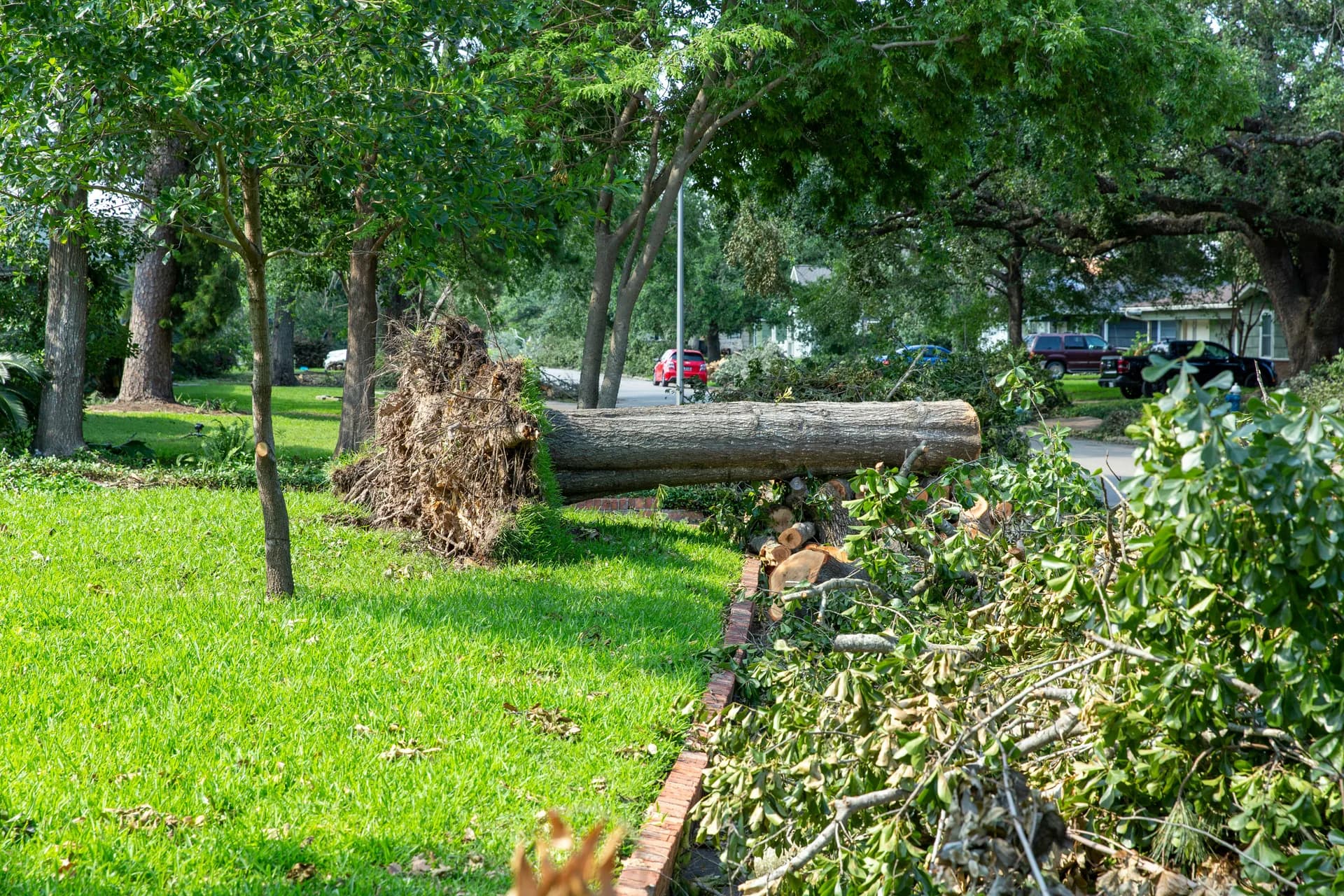
Shawnee has a right-of-way management process for work in public space. If a curbside stump or the proposed equipment position may fall within it, confirm the applicable requirements with the city before arranging the job.
A private grinding quote is not permission to use the right of way. Share city instructions with Matt so the scope and access plan account for them.
If your property includes a stream corridor, drainage feature or protected open space, identify it before adding root removal or brush mowing. The city’s development guidance covers stream corridors and land disturbance; ask which requirements apply to your proposed work.
Matt assesses brush mowing up to four acres, starting at $375. Mark the exact area to be considered and what should remain. Mowing a defined area is different from clearing trees, changing drainage or excavating a slope.
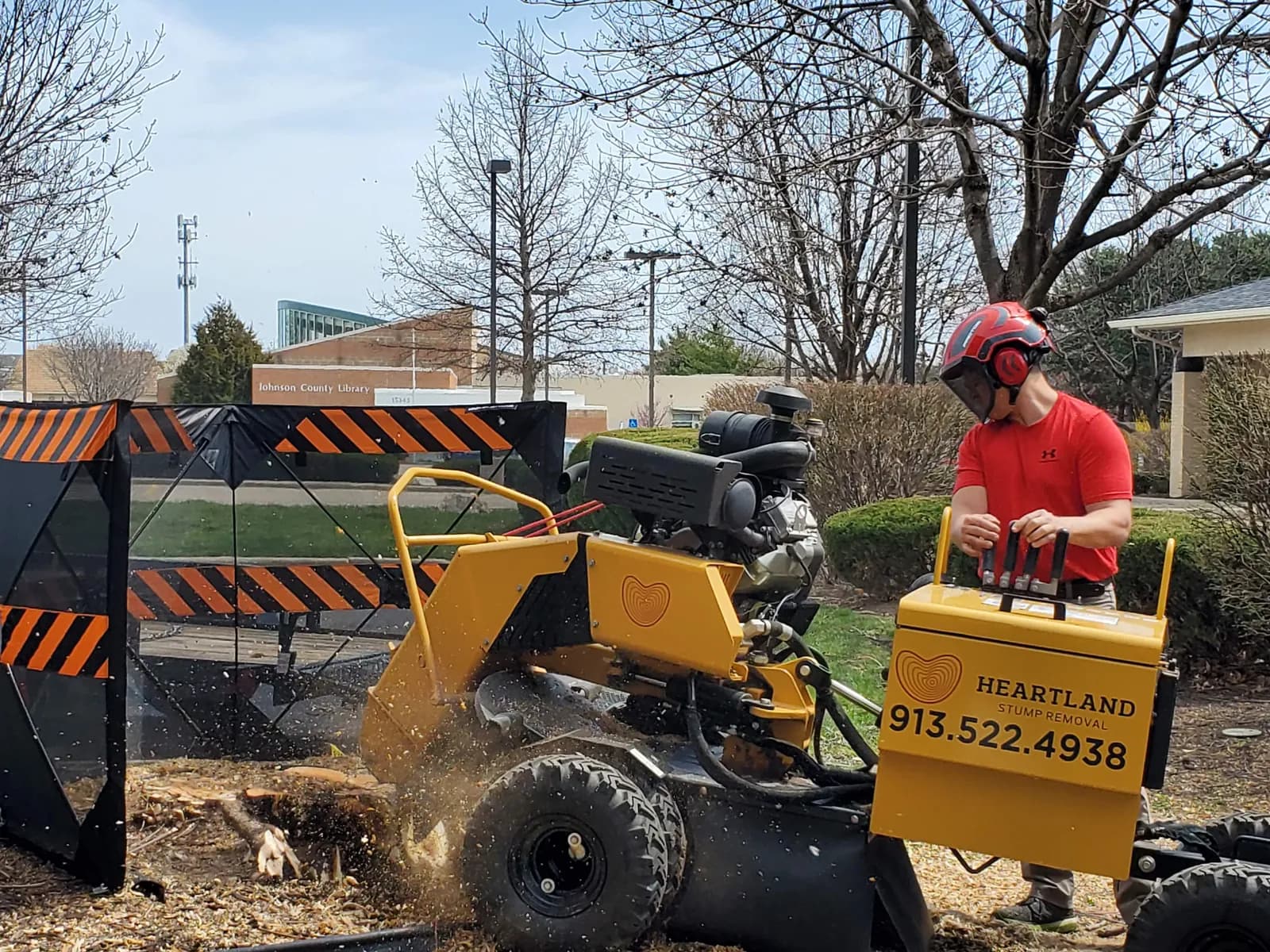
Matt reviews the stumps, selected roots and route. After bid acceptance, Heartland arranges the applicable utility-locate process and confirms readiness. Private irrigation, lighting and similar lines may require separate identification.
Tarps and shields help manage material around the cutting area. The grinder reduces the stump in passes; the wood becomes chips mixed with soil. Additional exposed roots are handled according to the agreed scope.
Matt rakes and blows around the work area and leaves the grindings in a neat pile. Hauling, replacement soil, grading, seed, sod and new planting are separate next steps.
Measure the widest base at ground level, including flared roots, and note the height. Label each stump if several are involved. Add a close photo with the measurement visible.
Step back to show fencing, buildings, paving, planting and exposed roots. Mention embedded wire, nearby private lines, remaining tree debris and what you want the space to become.
Show the driveway approach, gate opening, turns and any slope. Include your Shawnee address, a site contact and any access arrangements that need coordination.
Typical stump projects are $199–$299. Size, selected roots, access and the number of stumps determine your project quote.
Measurement guideNo. Measure the actual clear opening, then show the approach, corners, slope and room around the stump. Matt needs to assess the complete route and working space.
Send photos showing the stump, posts, wire and roots. Matt can assess the available clearance before deciding on a practical scope. Do not dismantle the fence before discussing the plan.
The slope, ground conditions and equipment route need an individual assessment. Take photos from a safe position; additional views or an on-site look may be needed before Matt confirms access.
The right-of-way guidance concerns work in public space; it does not establish a blanket permit requirement for every private-yard stump. Ask the city if the stump location or access plan brings that guidance into play.
Discuss access with Matt before scheduling. The agreed route and work area must be available, and a contact should be reachable for questions. Matt can send completion photos if you are away.
Discuss the sequence before either job is scheduled. An open route can make equipment access easier, and the fence installer may have requirements for future post holes. Share the fence layout with Matt so the stump and selected-root scope is clear.
Send the stump, its surroundings and the route in. Matt will help you put the work in order.
Matt takes calls every day, 8 a.m.–6 p.m., and typically responds within an hour during those hours.