
HEARTLAND’S FIELD GUIDE
How to measure a stump.
Measure straight across the widest part of the base at ground level, including the flare roots. Record the width in inches, then photograph the stump and the way in.
A good quote starts with the whole picture. Here’s how to capture it, even when your stump is anything but round.
Start with the baseBring: a tape measure, your phone and a place to keep your notes.
GET THE NUMBER RIGHT
Three checks. One useful measurement.
Use the visible base of the stump as your starting point. You’re documenting what’s there so Matt can assess it.
Find where the stump spreads out.
Look at the base where the trunk meets the ground. The outward-widening wood is the root flare. Start at its outer visible edge, not at the narrower cut surface above it.
Check more than one direction.
Start at the tape’s zero mark and run it straight across the base. Check another direction on an uneven stump and keep the widest reading. Don’t average the readings or bend the tape around the bark.
Add the height and the units.
Measure from the adjacent ground to the top of the stump. Write both numbers in inches. If the top or ground is uneven, show that in a side photo instead of hiding the difference in one number.
A base that measures 28 inches one way and 34 inches another should be recorded as 34 inches across the widest base. Add the stump’s height separately. If your tape shows feet and inches, 2 feet 10 inches is 34 inches.
BEFORE STUMP GRINDING
Prepare for stump grinding.
Check the cut height.
For the lowest possible bid, have stumps cut to 6 inches or less above ground whenever possible.
If another tree company is removing the tree, ask them to leave the stump at 6 inches or less.
Clear rocks at least 3 feet out.
Before grinding, remove landscape rocks for at least 3 feet around the outside edge of the stump. Rocks can settle into the soil, so some digging may be needed to remove them. Thorough removal is crucial to prevent flying rocks and damage to the grinder or surrounding property. Heartland may decline projects if rocks have not been adequately removed.
Show the base and the way in.
Measure the widest base at ground level, including flare roots. Send photos of the stump, surrounding area and equipment access.
Point out nearby edging, fences, paving, embedded metal and known private lines.
Send Matt your details ↗READING A REAL STUMP
The cut top doesn’t tell the whole story.
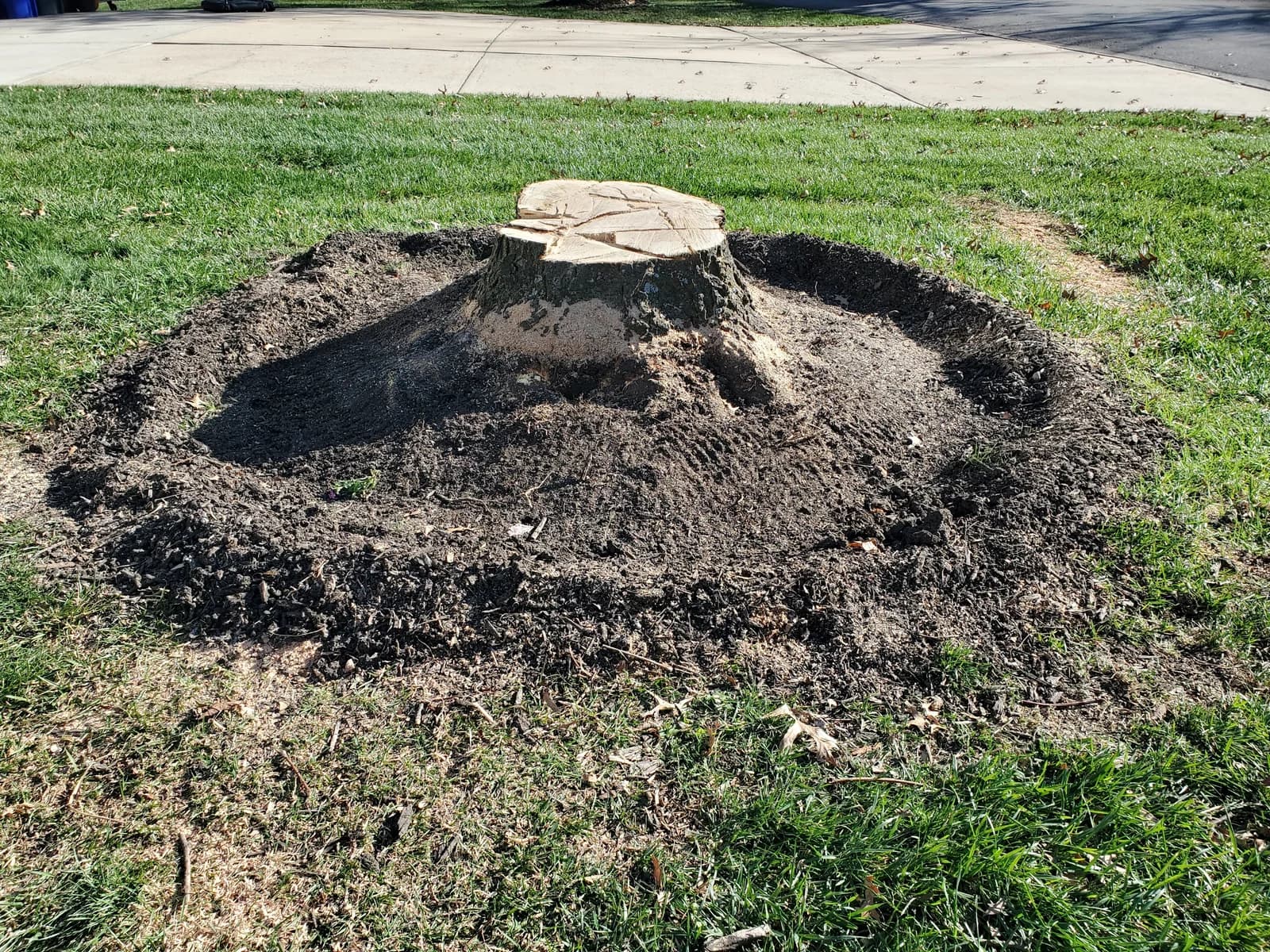
This Heartland project photo shows three different details to capture. They’re related, but they aren’t the same measurement.
1 The cut top
This is where the tree was cut. It can be much narrower than the wood at ground level.
2 The flared base
Include the visible wood spreading out at the bottom. This is the width to measure for the stump.
3 The raised ground
Show how the mound meets the surrounding lawn. Don’t assume the whole soil ring is solid stump, or that grinding includes leveling the entire area.
Long roots running across the yard? Photograph and describe those separately. The base measurement doesn’t define every root you want removed. See how surface root work is assessed
YOUR PHOTO SHOT LIST
Four views that help Matt see the job.
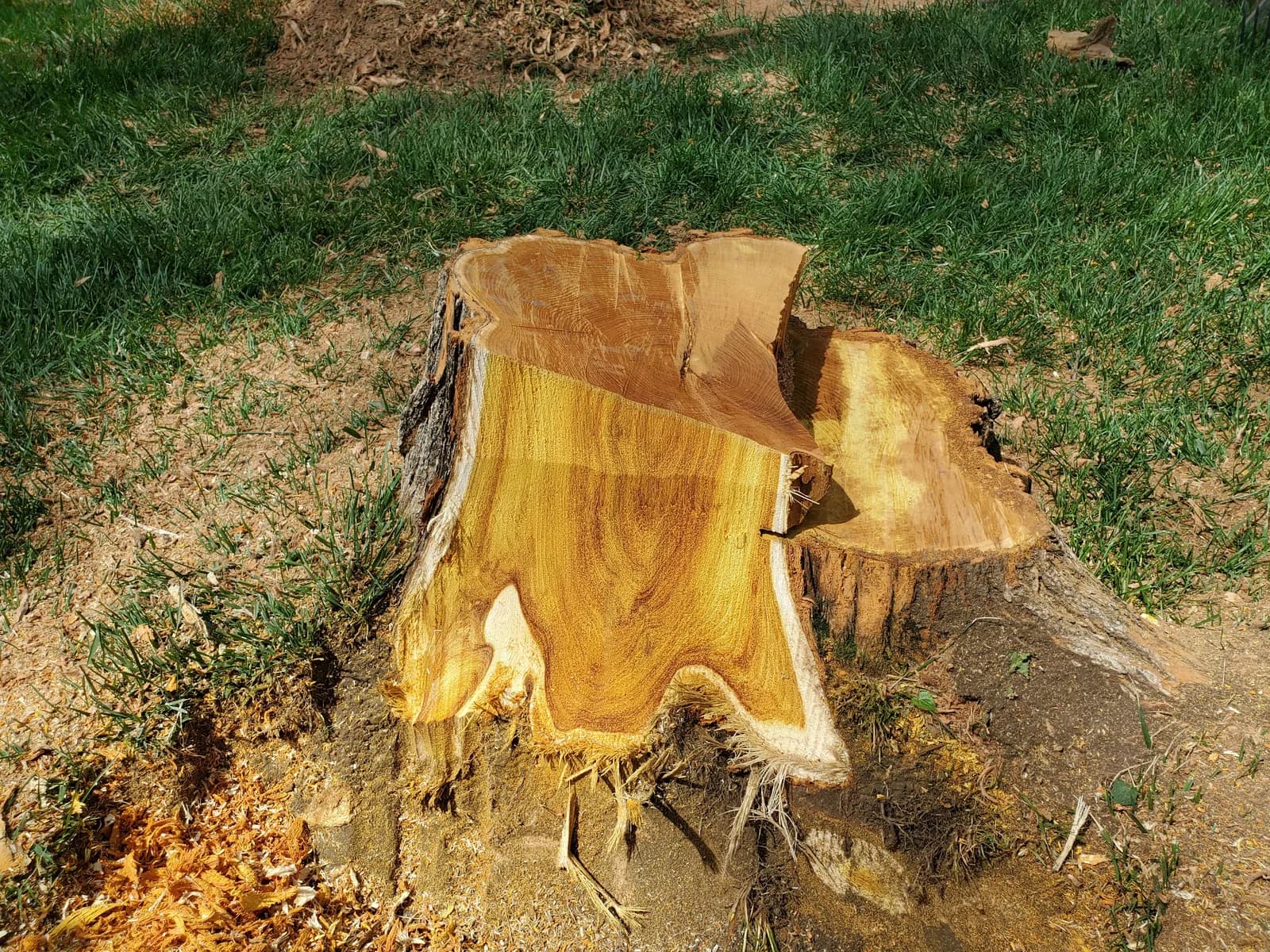
Use these real project photos as framing examples. For your measurement photo, include the tape and a readable number. Keep the originals clear and unfiltered.
The whole base
Get the full stump and both ends of the measurement in the frame. If the numbers aren’t readable, add a closer shot of the tape reading.
The surrounding ground
Step back to show the lawn, mound, nearby paving and planting. Keep the stump in view so Matt can connect the close-up to the wider area.
The way in
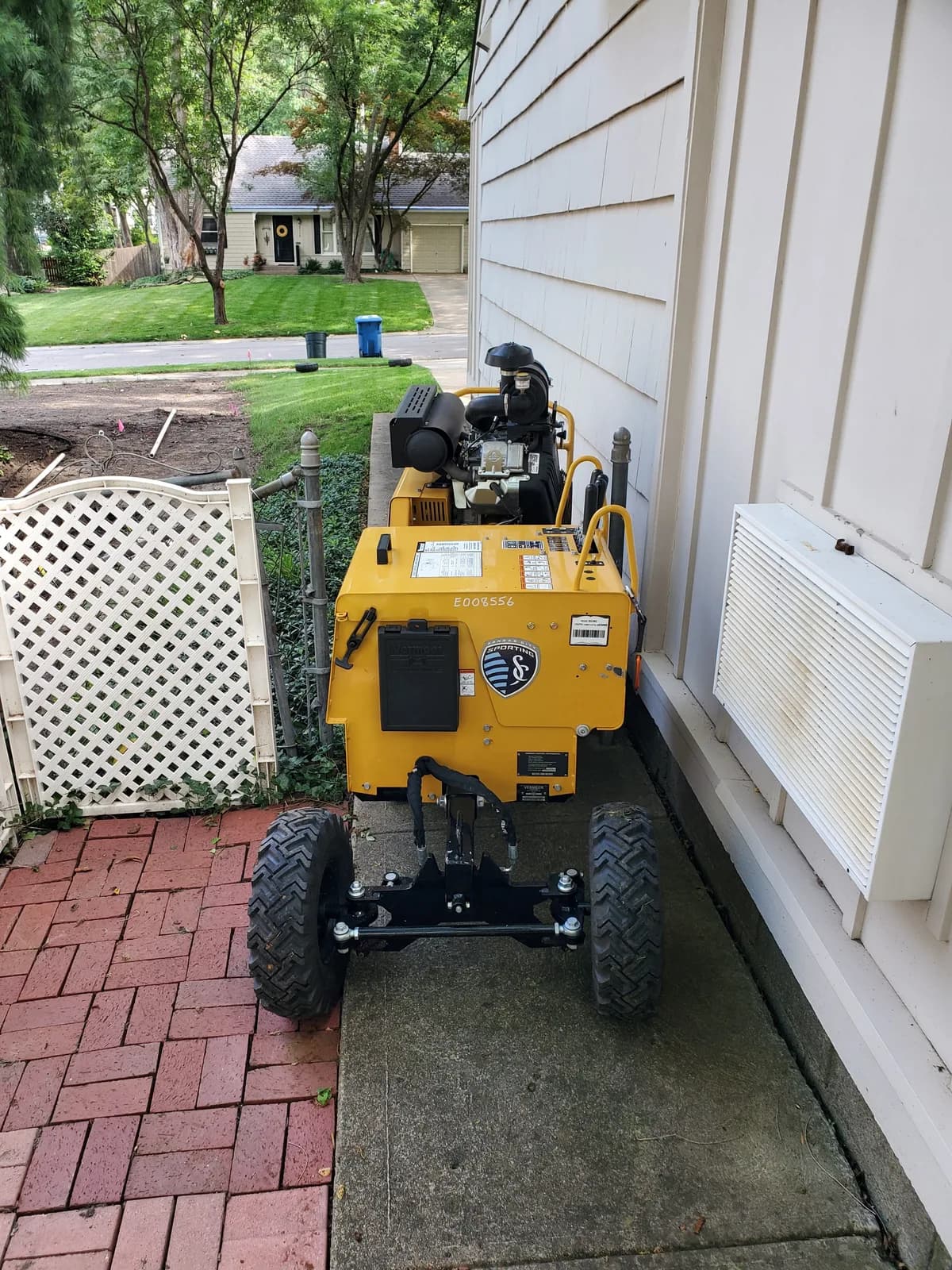
Show your open gate and the route from the driveway. Include the tightest point and any turn immediately before or after it.
Anything in the way
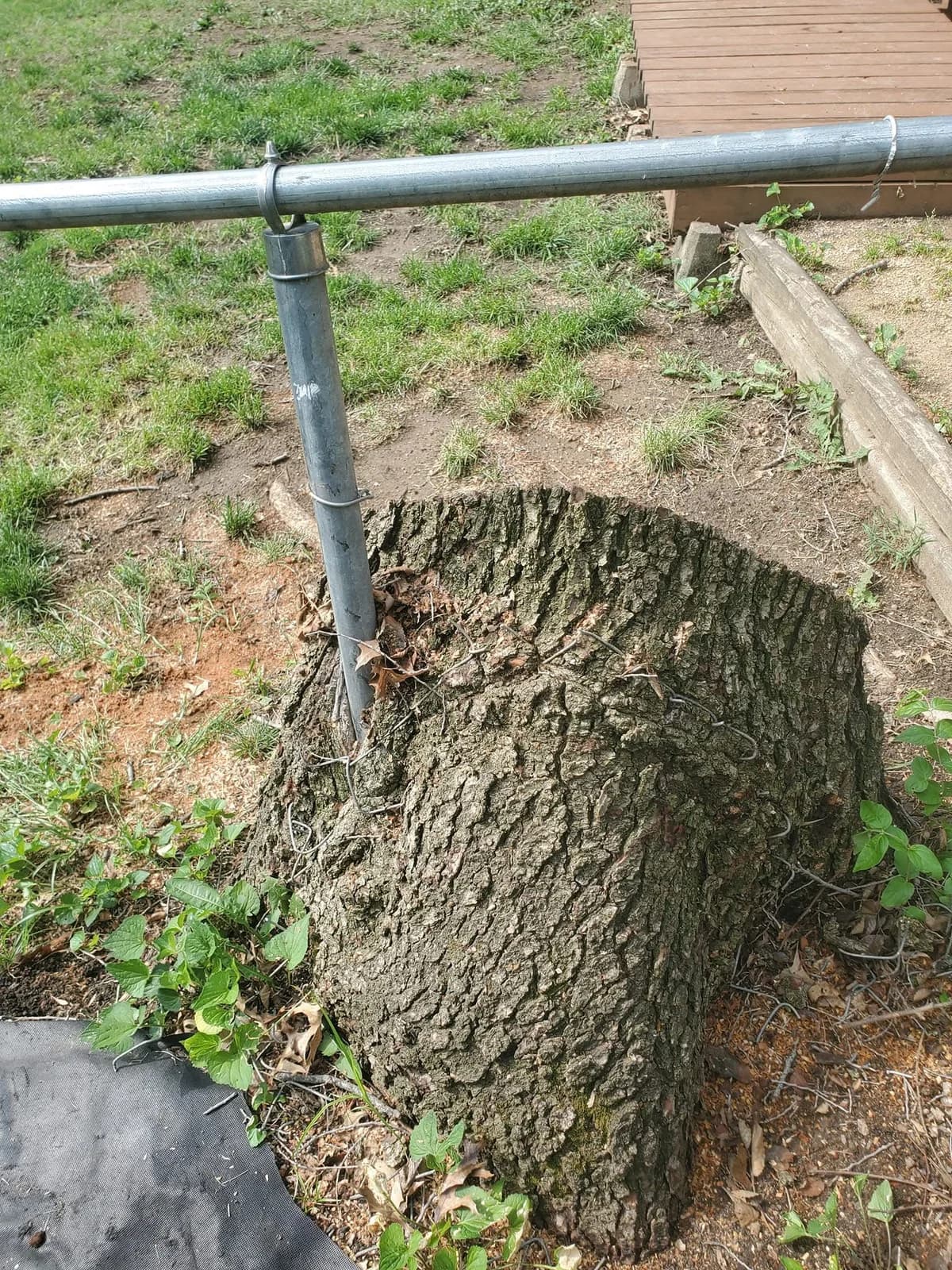
Photograph embedded metal, a nearby fence or a tight corner. Point out things that must stay and anything you know is underground.
Before you leave the yard: zoom in on your photos. Can you read the tape? See both ends? Tell which stump is which? The quote form accepts two to five photos. If you have more stumps than the photos can clearly cover, tell Matt and ask how best to share the rest.
FOLLOW THE EQUIPMENT’S ROUTE
A wide gate is only the beginning.
Walk from the driveway to the stump and photograph the places where equipment will need room. Include both sides of a tight turn.
- STARTDriveway
Parking and unloading space
- CHECKOpen gate
The narrowest clear opening
- FOLLOWThe path
Turns, slopes and steps
- FINISHThe stump
Working room around the base
A STARTING POINT FOR ACCESS
36 inches
Approximately 36 inches of clear width. The full route still needs Matt’s assessment.
Measure the space that’s actually open.
Open the gate fully and measure between the closest obstructions. A latch, hinge, post or gate resting partway open can reduce the usable width. Don’t use the gate’s advertised size.
Flag steps, sharp turns, soft ground, steep sections, low branches and narrow spaces beside walls. Tell Matt if access crosses a neighbor’s property or requires an arrangement with someone else.
WHEN THE STUMP ISN’T SIMPLE
What to do with the awkward details.
You don’t need to solve these problems before asking for a quote. Clear notes help Matt decide what needs a closer look.
- A hollow or decayed center
- Measure the outside of the visible base. Photograph the cavity too; don’t subtract it from the width or assume the whole stump is soft.
- Two trunks or a joined base
- Show the whole cluster and where the trunks join. Record the widest connected base and explain what you’ve measured so it isn’t mistaken for two separate stumps.
- Soil or mulch hides the edge
- Photograph what you can see and mark the measurement as approximate. You don’t need to dig down or guess how far the wood extends underground.
- A fence post, wire or rock
- Send a close-up and a wider view. Mention known embedded material even if it’s hidden. Leave it in place for assessment rather than trying to remove it yourself.
- A stump on a slope
- Show the uphill and downhill sides. Note where you measured the height, since the ground level may be different on each side.
KEEP EVERY STUMP STRAIGHT
Make a list you can actually use.
Give each stump a number and use it in your photo names: “Stump 1 close,” “Stump 1 wide.” Add your readings below, then copy the list into the project details on your quote request.
One more detail: what comes next?
Tell Matt whether you want grass, a planting bed, another tree or space for construction. Stump grinding doesn’t remove the entire root system. For a standalone grinding job, the grindings stay on site; hauling, new soil and lawn repair are separate steps to discuss.
See what affects the quoteA FEW MEASURING QUESTIONS
Still looking at your stump?
Do I measure the cut top or the bottom of the stump?
For Heartland’s quote, measure the widest visible base at ground level, including the flare roots. The flat cut top often looks much smaller. Send a photo showing where your measurement starts and ends.
Is diameter the same as circumference?
No. Diameter goes straight across; circumference goes around the outside. Don’t wrap the tape around the stump. A flared, uneven stump isn’t a perfect circle, so a circumference calculation can miss the width Matt needs.
What if I don’t have a tape measure?
Send clear photos and tell Matt you haven’t measured yet. Don’t present a guessed width as a measurement. If you have a ruler or another measuring tool, include its units and explain how you took the reading.
Should I dig around the roots before measuring?
No digging is needed just to take measurement photos for a quote. Photograph the visible base and tell Matt if soil, mulch or other material hides the edge. Don’t uncover buried roots, pull out embedded metal or disturb utility markings for a photo. Separately, landscape rocks must be cleared before grinding; settled rocks may need digging out. See the preparation section for the required clearance.
How do I measure several stumps?
Give each stump its own number, width, height and location. Use the same numbers for your photos and notes. Keep the measurements separate rather than adding all the diameters together. Matt can quote the work as a project.
Will measurements and photos guarantee a final price?
They help Matt understand the work, but access, obstacles, the size of the base and your requested finish all affect the quote. Some sites need a closer look. Tell him what you want done with the area so the agreed scope is clear.

FROM YOUR YARD TO MATT
Got the number? Send the whole picture.
Include your measurements, two to five clear photos, the property address and what you want done. Matt will review the details with you.
Matt takes calls every day, 8 a.m.–6 p.m., and typically responds within an hour during those hours.
Based in Lenexa, serving Johnson County. Meet Matt Altrich