Land & trees · 5 MIN READ
Should You Trim a Tree or Remove It? A Kansas City Homeowner's Guide
Tree trimming may address specific branches, clearance, or structural development when a tree can reasonably be retained. Removal may be appropriate when the whole tree presents an unacceptable risk, has severe decline, or can’t remain in the proposed space.
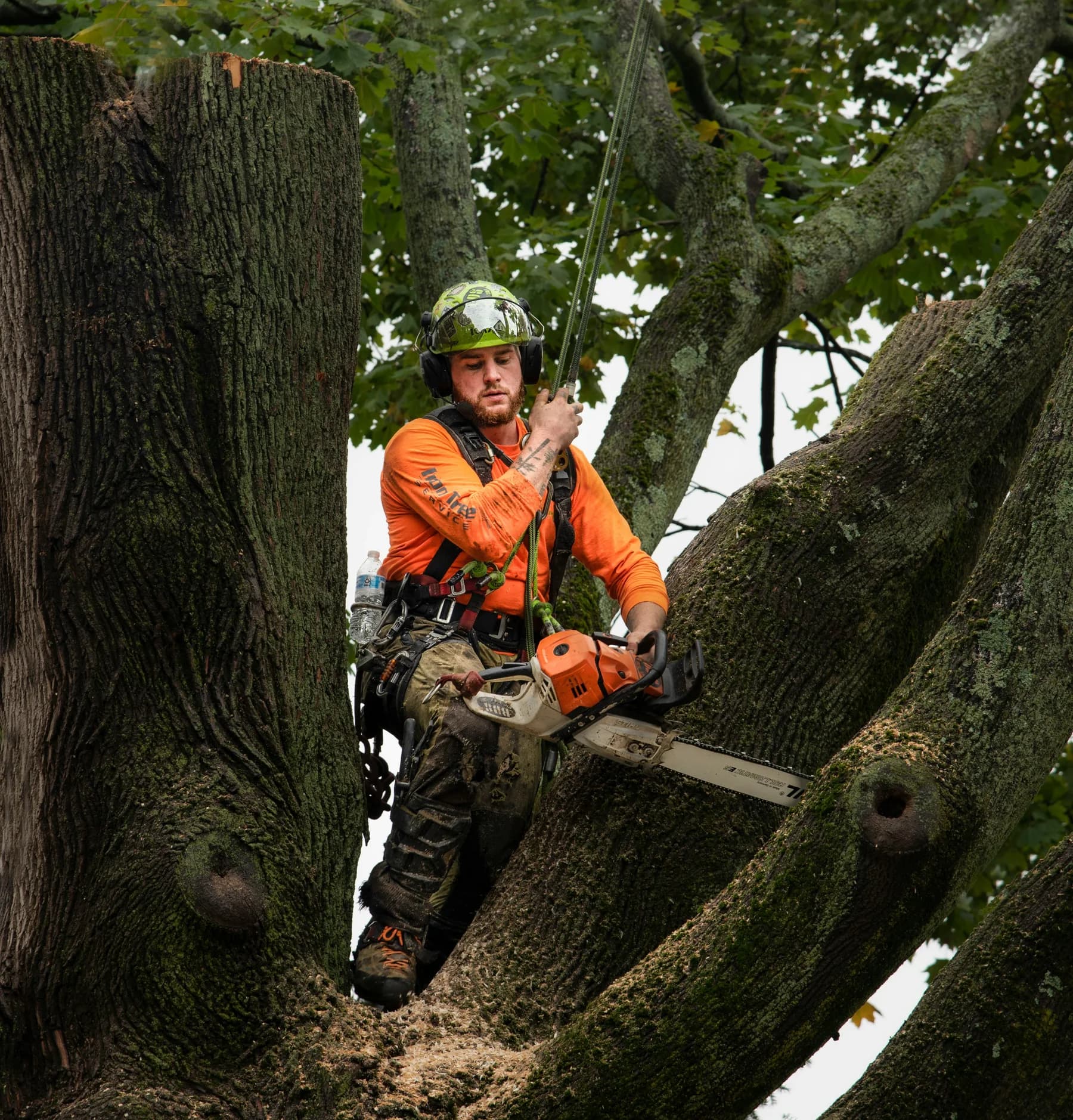
The decision needs an assessment of the tree and its surroundings. Size alone doesn’t settle it. Neither does one broken branch, a few brown leaves, or the fact that a tree leans.
Before asking someone to “cut it back,” identify what concerns you and what you want the work to accomplish.
When trimming may address the problem
Pruning is a targeted treatment. Useful objectives can include removing dead branches, addressing certain rubbing limbs, improving young-tree structure, or creating appropriate clearance.
Ask the contractor to explain which branches need work and why. Purdue Extension's pruning guidance emphasizes having a purpose for each cut and accounting for the tree's long-term health and structure. Source: Purdue Tree Pruning Essentials.
A helpful scope sounds like “remove identified dead limbs over the driveway” or “address these branches contacting the roof.” A request to remove an arbitrary percentage of the canopy gives much less direction.
For a tree near the house, talk through the actual conflict. A branch brushing shingles, a crowded young canopy, and a major trunk defect need different responses.
Which signs deserve prompt evaluation?
Take changes in the tree seriously, especially after a storm or nearby construction. Keep people clear of the affected area if you see hanging limbs, a new or worsening lean, visible movement at the base, or a fresh split in a large branch or trunk.
Other concerns include substantial dead branches, decay, damaged roots, and large branch unions that appear to be separating. These are reasons for assessment, not a diagnosis you need to make yourself. The International Society of Arboriculture provides guidance on recognizing hazards and obtaining a professional evaluation. Source: ISA managing tree hazards and risk.
Photograph changes from a safe location and note when you first noticed them. Mention recent trenching, grading, vehicle impact, or construction. That history gives an evaluator more useful context than a close photo of a leaf.
A sick-looking tree doesn’t always need removal
Leaf spots, minor insect feeding, or unusual growth can look alarming without meaning the whole tree is dying. Missouri's Department of Conservation explains that some highly visible symptoms have relatively limited effects, while less obvious stressors such as construction damage or compaction can matter much more. Source: What's Killing My Tree?.
Ask what’s known, what’s uncertain, and whether a qualified arborist should evaluate the tree before a removal decision. If treatment or monitoring is an option, understand its purpose, likely follow-up, and limitations.
You should be able to understand why the recommendation fits your tree. “It looks bad” isn’t a useful explanation of the condition or the available choices.
Topping isn’t a substitute for proper pruning
Topping cuts major branches back to stubs to reduce the tree's size. It can create decay and poorly attached new growth, leaving future problems rather than providing a dependable fix. Purdue Extension specifically warns against this practice. Source: What's Wrong with Topping?.
If the concern is height or proximity to a building, ask whether appropriate pruning can achieve the necessary clearance without compromising the tree. If it can’t, discuss the realistic alternatives.
Avoid requesting a familiar-looking shape just because other trees on the street were cut that way. The goal is a sound recommendation for the species, condition, and location.
When is the best time to trim trees in Missouri?
Timing depends on the species, condition, and reason for pruning. Routine work can often be planned for a suitable season, while a dangerous hanging branch needs prompt professional attention.
Oaks deserve particular attention. The Missouri Department of Conservation recommends avoiding pruning or damaging oaks from mid-March through June to reduce oak wilt risk. If an oak is storm-damaged during that period, ask a qualified professional how to address the damage while following local disease-prevention guidance. Source: Missouri oak wilt recommendations.
Don’t apply one calendar rule to every tree on the property. When requesting an estimate, identify the species if you know it and describe whether the work is routine maintenance or a response to damage.
Compare the complete scope before booking
For trimming, ask which branches or objectives are included and what happens to the debris. Heartland’s tree removal includes debris cleanup. When stump grinding is done at the same time as tree removal, the mulch is also cleaned up and hauled away. Confirm the stump and exposed-root scope in your quote.
Discuss access, nearby buildings, fences, landscaping, and overhead utilities. Trees near power lines require coordination with the utility and appropriately qualified crews. Don’t attempt that work yourself.
If one proposal recommends trimming and another recommends removal, ask each provider to explain the condition driving the recommendation. A qualified arborist's assessment may help resolve that difference before an irreversible decision.
Get a recommendation tied to your property
Heartland coordinates professional tree trimming and tree removal from start to finish. We work with experienced, insured tree professionals to complete the job safely and efficiently. Matt’s your contact for planning the project and discussing the scope. Send photos of the whole tree, its base, and the nearby area from safe positions. Describe the concern and what you want to preserve or change.
Request a tree service estimate and ask for a clear explanation of the proposed work, including whether the stump and cleanup are part of the price.
A useful next step.
You don’t need every answer before getting in touch. Start with your location, a few photos taken safely and what you’d like to do with the space.
See what this service includes