Land & trees · 5 MIN READ
Forestry Mulching vs. Brush Hogging: Which Does Your Property Need?
Brush mowing is generally a fit for tall grass, weeds, and lighter growth within the mower's cutting capacity. Forestry mulching handles heavier woody vegetation with equipment that processes it into mulch. Land clearing is the broader job, which may involve either method plus tree removal, stump work, or excavation.
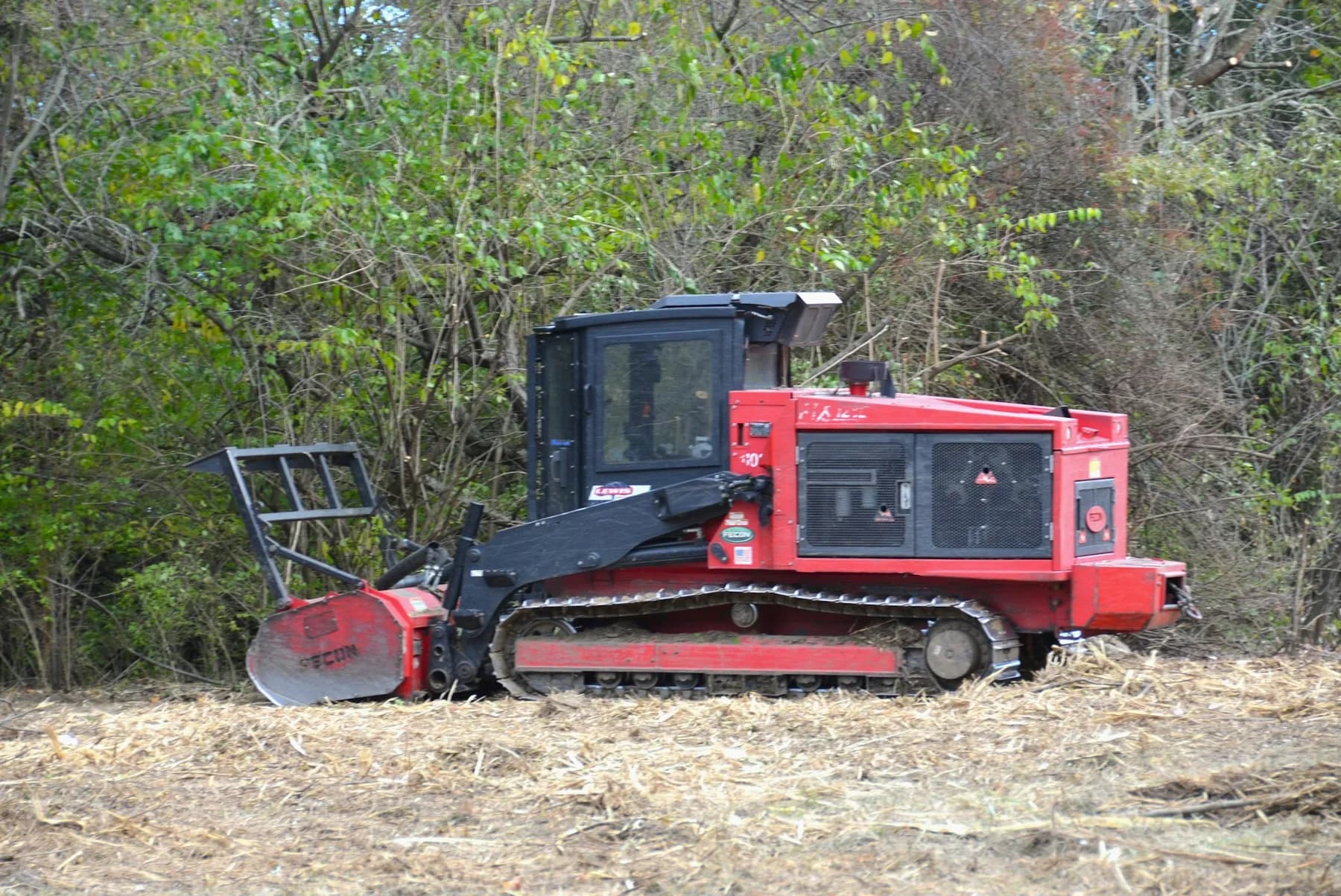
The right choice depends on two things: what’s growing there now and what you want to do with the land next.
An overgrown field that needs routine mowing has a different finish requirement than a wooded lot intended for a building. Before booking equipment, decide what “cleared” needs to mean on your property.
Brush mowing suits land you want to keep maintained
Brush mowing, often called brush hogging or bush hogging, cuts vegetation using equipment designed for heavier conditions than an ordinary lawn mower. The exact material it can handle depends on the machine and attachment.
It’s a service to discuss when a field, vacant lot, or open section of acreage has become difficult to maintain. It may also fit recurring work after an initial clearing project.
Describe the growth accurately. Tall grass can hide woody stems, wire, dumped debris, rocks, and old stumps. Photos taken from the edge may not show everything the operator will encounter.
Ask what the cut material and remaining stems will look like. A rough-cut field shouldn’t be mistaken for a finished residential lawn, and a newly cut area may still need inspection before people or ordinary mowing equipment use it.
Forestry mulching processes woody vegetation on site
A forestry mulcher uses a cutting attachment to grind suitable brush and woody material into mulch. Equipment capacity varies, so there is no universal tree diameter that every mulcher can handle. Fecon's equipment guidance describes how carrier power, attachment type, and the vegetation affect the work and finish. Source: Fecon forestry mulching equipment.
Forestry mulching often goes along with land clearing. Matt can arrange mulching for overgrown underbrush and trees up to 6 inches in diameter, with the site and vegetation determining the scope. Mulching is worth discussing for dense brush, saplings, overgrown woodland edges, and access routes through vegetation. Selective clearing may allow you to open part of a property while retaining chosen trees.
The material usually remains on the site unless removal is separately arranged. Ask to see a completed project with vegetation similar to yours so you understand the likely texture and appearance.
Don’t judge the result only by a distant before-and-after photo. Ask what remains at ground level and what follow-up is needed for your intended use.
Land clearing describes the outcome and can require several services
Forestry mulching is one land clearing method. It doesn’t replace every task involved in preparing land for a new use.
A project could include removing selected trees, processing brush, grinding stumps, removing debris, and bringing in a separate excavation contractor. The scope depends on the site and the finished project.
If you’re planning a building, driveway, or other constructed surface, have the contractor responsible for that work define what must be removed below grade. A mulched surface doesn’t establish that buried wood is gone or that the ground is ready for construction.
That distinction protects your budget. It’s better to coordinate the complete scope now than discover that the next contractor needs work redone.
Match the service to the intended result
| Your goal | Service to discuss | Detail to settle before work |
|---|---|---|
| Keep an open field manageable | Brush mowing | Vegetation size and maintenance frequency |
| Reclaim an area filled with woody brush | Forestry mulching | Cutting capacity and ground finish |
| Open a trail while keeping selected trees | Selective clearing or mulching | Route, width, retained trees, and drainage |
| Prepare for new lawn | Clearing plus a restoration plan | Remaining wood, soil preparation, and seeding |
| Prepare a building footprint | Clearing coordinated with site preparation | Below-grade removal and construction requirements |
Which option costs less?
The useful comparison is the total cost to reach your goal. An hourly rate doesn’t tell you how much suitable work a machine can complete or what will remain afterward.
Request a scope that identifies the clearing boundary, vegetation to remove, trees to retain, finish, and handling of debris. Ask whether the price covers the full area or a defined amount of equipment time.
For acreage quotes, share more than the parcel size. A five-acre parcel might need only a narrow access lane opened, while a much smaller lot could require dense growth to be processed throughout. Photos, approximate dimensions, and a marked aerial image help define the actual job.
Will brush grow back after forestry mulching?
It can. Cutting or mulching visible growth isn’t a promise that every root system or seed is gone.
Species identification matters. Missouri's Department of Conservation notes that bush honeysuckle can resprout after cutting and may need repeated or combined control methods. Plan follow-up based on what’s growing, rather than assuming one pass permanently solves the problem. Source: Missouri bush honeysuckle control guidance.
Ask what maintenance fits the site after clearing. That could mean later mowing, monitoring for regrowth, or a separate species-specific treatment plan with a qualified provider. Discuss retained habitat and screening at the same time so useful vegetation isn’t removed by default.
What to decide before requesting a clearing estimate
Identify the work boundary and the trees you want to keep. Explain where equipment can enter, what’s known about hidden debris, and whether the site has steep ground, drainage features, or areas that stay wet.
Then describe the outcome in plain language: “We want a mowable field,” “We need access to the back of the property,” or “We are preparing this footprint for a future shop.”
Matt manages Heartland’s land clearing and forestry mulching projects up to 350 acres with professionals he’s vetted and worked with for years. Brush mowing covers suitable projects up to 4 acres, with a $375 minimum. Request an estimate with photos and your intended use so the proposed work can be matched to the property.
A useful next step.
You don’t need every answer before getting in touch. Start with your location, a few photos taken safely and what you’d like to do with the space.
See what this service includes