Stumps & roots · 5 MIN READ
Can Tree Stumps Grow Back After Grinding?
Yes, some trees can send up new shoots after stump grinding. The ground stump itself won’t re-form, but living tissue left at the base or in the surrounding roots can still sprout. Whether that happens depends mostly on the kind of tree and where the living tissue remains.
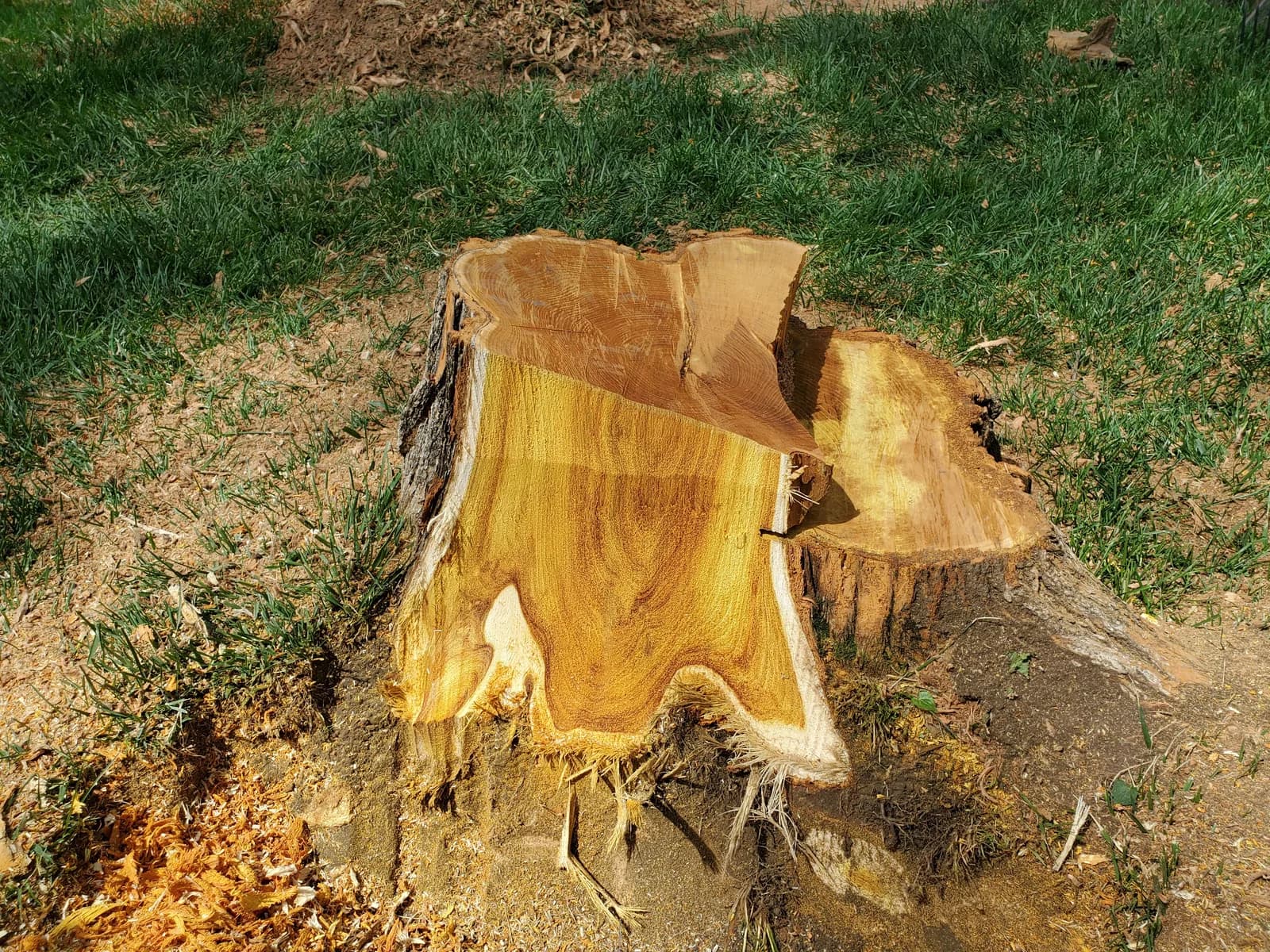
If you’ve spotted green shoots in the lawn where a tree used to stand, look at where they’re coming up before paying to have the spot ground again. A cluster in the old stump hole and a row of shoots along the fence can point to different sources. Here’s how to tell what you’re seeing and plan the next step.
Why do shoots appear after stump grinding?
A tree stores energy in its roots. After the trunk is cut, some species can use those reserves to push out new stems from buds in living tissue. University of Florida IFAS Extension explains that regrowth after grinding can come from leftover stump tissue or from roots that extend sideways away from the trunk. If the shoots are allowed to leaf out, they can make sugars that help keep the connected roots alive.
Here’s what to look for. These are clues, so take photos if you’re unsure which kind of growth you have.
- Stump sprouts: A tight cluster at the old trunk location may be attached to living wood left near the base, where the trunk met the roots.
- Root suckers: Shoots popping up across the lawn, in a nearby bed or in a rough line away from the stump may be growing from the same underground root.
- Seedlings: A young tree that grew from seed has its own roots. It can show up in the same patch, especially if nearby trees drop seed there. It may even be the same species as the tree you removed.
Which trees are more likely to grow back?
The species matters more than the size of the stump. Some trees sprout readily from the base after cutting, while others are especially good at sending shoots up from roots beyond the grinding area. These are a few to watch for around Kansas City:
- Bradford pear: Bradford is a variety of Callery pear. The Missouri Department of Conservation’s Callery pear guide describes vigorous sprouts after removal and explains how birds can spread its seeds. Both can account for new growth in a yard.
- Black locust: The USDA’s black locust plant guide describes prolific root suckering, which is why cutting the original tree alone often doesn’t stop new stems.
- Tree of heaven: This invasive tree can send up many shoots when cut. Penn State Extension’s tree of heaven guide explains how to distinguish it from lookalikes such as sumac and why it calls for a different control plan.
Willow and mulberry can also sprout after cutting, especially if some living stump tissue remains. If you don’t know what tree you had, a clear photo of the leaves and how they’re arranged on the stem can help your local extension office or an arborist identify it.
Does grinding deeper prevent regrowth?
Grinding deeper can remove more of the stump and the root crown, where the trunk widens into the roots. That can help when the remaining growth is coming from the old base. It doesn’t remove roots extending under the lawn, sidewalk or planting bed. A sucker several feet away may keep returning even if you grind the center again.
Ask what’s included before work begins. A lawn you want to mow smoothly, a spot for a new tree and a future patio have different needs. Matt can assess selected exposed roots along with the stump. If the next project requires buried wood to come out, compare grinding with full stump excavation and check what your landscaper or builder needs.
What should you do if shoots come back?
- Take photos before trimming. Get a close view of the leaves and a wide shot that shows the old stump location. Note how far away the shoots are and whether they’ve come up before.
- Identify the tree before treating anything. Shoots may be connected to the old root system or to a nearby living tree you want to keep. If the original tree is still standing and you suspect tree of heaven, ask about a control plan before cutting it down.
- Match the response to the source. A seedling can often be pulled when it’s small and the soil is moist. Cutting occasional suckers keeps them short, but they can return. If they keep coming back or spread into beds, ask an arborist or your local extension office about options for that species.
- Check whether a treatment is appropriate. A treatment applied to a freshly cut stump can help with some species. It’s a different step from grinding. Tree of heaven is an exception: Penn State Extension advises against cut stump treatment because it doesn’t control the roots well. If a product is recommended for your situation, follow its label for the site and application.
What happens to the roots that don’t sprout?
Once the remaining roots die, they break down in the soil. Larger woody roots can take years to decompose, and the ground may settle as the buried wood breaks down. A low spot that develops later is different from a patch of new shoots. If you’re restoring a lawn, Iowa State University Extension recommends clearing out excess wood debris before adding soil and planting grass.
Heartland rakes and blows the work area and leaves the grindings in a neat pile. Plan hauling, soil and seeding separately. See our guide to what happens to roots after stump grinding if you’re deciding what to plant or build there.
Planning stump grinding in the Kansas City area?
Heartland Stump Removal provides stump grinding in Lenexa and throughout Johnson County, Kansas. Tell Matt what kind of tree came down if you know, what growth you’ve already seen and how you want to use the area. A wide photo of the stump and surrounding yard helps him see what’s accessible and which exposed roots you want included.
If the stump’s still there, measure across the base, including the root flare. Then send Matt your photos for a free estimate so he can help you plan the grinding and tell you what will remain afterward.
Frequently asked questions
Does stump grinding kill all the roots?
No. A grinder removes wood where its wheel reaches. Roots beyond that area can remain alive for a time, and some species can produce suckers from those roots. Once the roots die, the wood decomposes underground.
Can new shoots show up months after stump grinding?
Yes. You might see shoots later in the growing season or after winter. Take photos of the leaves and where the stems appear so you can check whether they’re connected to old roots or are new seedlings.
Will mowing stop tree suckers from growing back?
Mowing can keep small shoots down, but it doesn’t guarantee the root will stop sending up more. If they come back repeatedly, identify the tree before deciding whether you need a different approach.
Do shoots mean the stump was ground incorrectly?
Not necessarily. Even when the stump was ground to the agreed depth, some trees can sprout from roots outside the grinding area. If growth is clustered right at the old stump, send a photo showing where it emerges so the source can be assessed.
A useful next step.
You don’t need every answer before getting in touch. Start with your location, a few photos taken safely and what you’d like to do with the space.
See what this service includes