Storms & property care · 5 MIN READ
A Tree Fell After a Storm in Kansas City. What Should You Do First?
Keep people away from the tree and check for immediate danger from a safe location. If someone is injured, a tree threatens an occupied area, or power lines are down, call 911. When wires are involved, the electric utility needs to address the electrical hazard before ordinary tree cleanup begins.
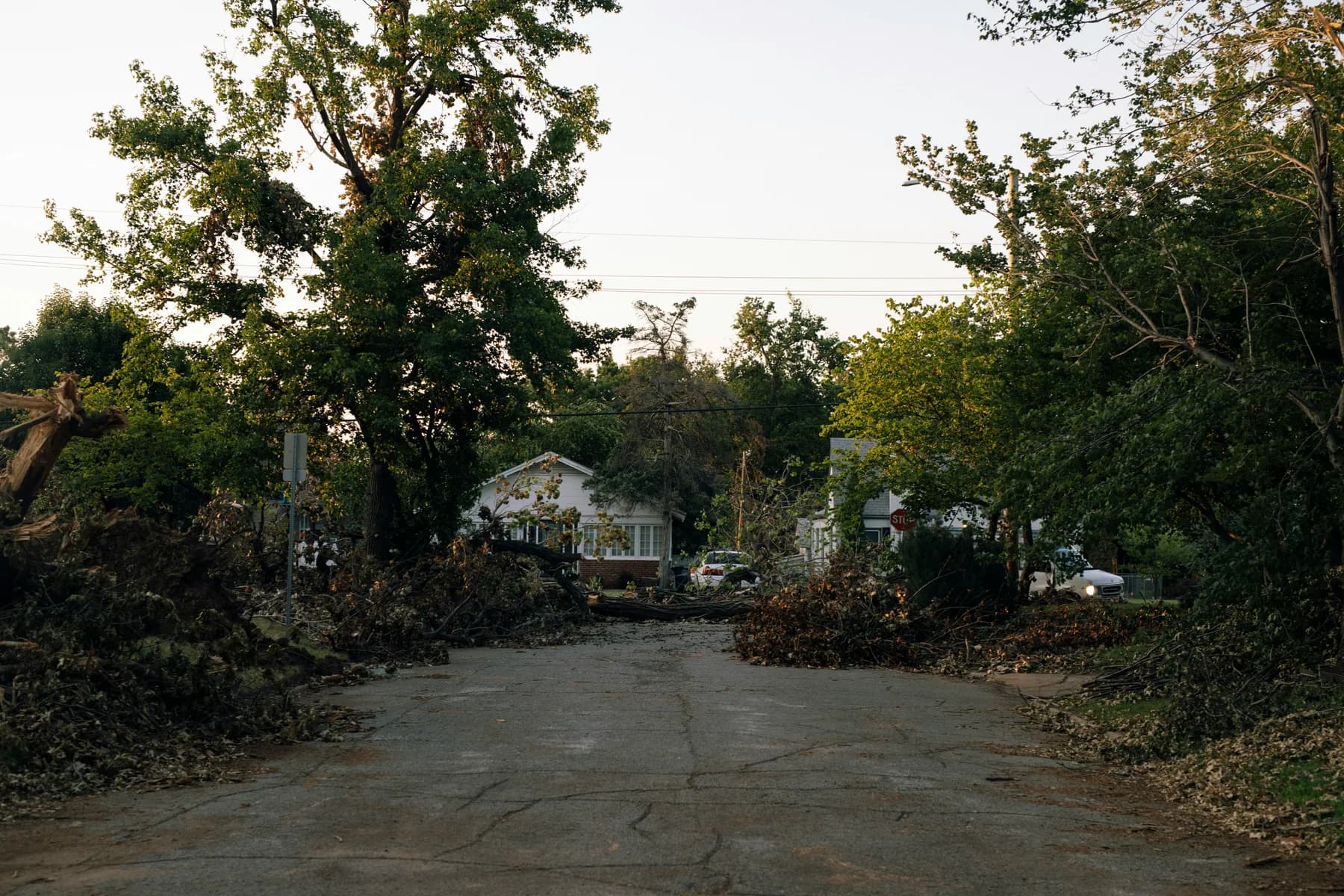
If there is no immediate emergency, the next steps are to document what you can safely see, report relevant property damage to your insurer, and request a clearly defined cleanup estimate.
The order matters. Removing branches isn’t the first job when the area may still be dangerous.
Stay clear of wires and anything touching them
Assume a downed line is energized. Evergy tells customers to stay at least 30 feet away, call 911 first, and then report the line to Evergy. Don’t touch a tree, fence, vehicle, or other object in contact with the line. Use your own electric provider if another utility serves the property. Source: Evergy power line safety.
Don’t try to identify a wire by its appearance or move it to clear the driveway. Keep children and pets inside or in a separate safe area. A fallen branch can conceal a line you can’t see from the house.
When contacting a tree company, say immediately if wires may be involved. That information affects who must respond and when the tree work can proceed.
A fallen tree can still move
Avoid climbing over the trunk, standing under broken limbs, or cutting branches to make a path through the damage. A tree resting on a structure or another tree isn’t necessarily stable.
Tell the responding professional whether the tree is uprooted, suspended, split, or leaning on something. Don’t approach to gather measurements or inspect how it’s supported.
Keep the work area closed to residents, visitors, and vehicles until qualified responders have addressed the hazards. The fact that the wind stopped doesn’t establish that the tree is safe.
Photograph the damage from a safe position
If you can do so without approaching hazards, take wide photos showing the tree's location and the affected property. Include the house, garage, fence, driveway, or other damaged features in the frame.
Useful documentation includes:
- The overall scene and approximate direction of the fallen tree.
- Damage visible from a safe location.
- Blocked access points.
- The remaining standing portion of the tree, if visible safely.
- Dates, contractor estimates, and receipts associated with the response.
Don’t climb onto a roof or enter a damaged structure for better pictures. Document only what you can safely access, then follow instructions from emergency responders and your insurer.
Who should you call for a fallen tree?
The first call depends on the problem in front of you.
| Situation | First contact or next step |
|---|---|
| Injury or immediate danger to people | Call 911 |
| Downed wires or possible electrical contact | Call 911 and the electric utility; stay clear |
| Tree resting on a damaged structure | Keep clear; seek emergency direction if occupied areas are threatened, then contact insurer and qualified tree service |
| Tree across a public road | Report it to the responsible public agency; call 911 for immediate traffic danger |
| Tree down in the yard with no apparent immediate hazard | Request a professional cleanup assessment and estimate |
If you’re unsure whether the situation is an emergency, describe the conditions to emergency dispatch. Don’t enter the affected area to decide for yourself.
Separate urgent removal from the rest of cleanup
A storm cleanup job can include several phases. Addressing a hazardous tree, hauling branches, removing logs, grinding a stump, and repairing the lawn are different tasks.
Ask the contractor to identify which work is urgent and which can be scheduled after the area is secure. A proposal should explain what happens to large wood, smaller debris, and the remaining stump.
This matters when you’re comparing estimates under pressure. One price might cover removing the tree from a structure, while another also includes hauling and stump grinding. The total alone doesn’t tell you what you’re buying.
For an uprooted tree, ask how the root plate and disturbed ground will be handled. Don’t assume a standard stump grinding description covers that situation.
What should you ask your insurance company?
Describe what was damaged and ask what documentation and estimates the insurer needs. Ask whether there are separate requirements for urgent work and later restoration, and how to keep records of each expense.
Don’t rely on a contractor's general statement that insurance will pay. Coverage and payment decisions depend on the policy and circumstances. Get those answers from the insurer without delaying an emergency response.
Keep the contractor's scope and invoices so you can explain exactly what was done. If the tree came from another property, document the scene and let the appropriate parties address responsibility.
Check what remains after the debris is gone
The cleared yard may still have a damaged standing tree, exposed roots, or an area that needs restoration. Ask whether another assessment is needed and what follow-up work should be planned.
If a damaged tree can be retained, pruning and monitoring may be part of the recommendation. If it needs removal, confirm the stump scope before closing out the project.
Matt coordinates Heartland’s storm cleanup and professional tree removal from start to finish. We work with experienced, insured tree professionals to complete the tree work safely and efficiently. He can also discuss stump grinding as part of the plan. Once immediate hazards are addressed, contact Heartland with the property location, safe photos, and a description of what’s down or damaged. Ask about current availability and the complete cleanup scope.
A useful next step.
You don’t need every answer before getting in touch. Start with your location, a few photos taken safely and what you’d like to do with the space.
See what this service includes